Unit 6.4 Systems of Classification
Biology → Biology → CLASSIFICATION → CLASSIFICATION → Classification & Taxonomy | Author: admin | Feb 24, 2026
Systems of Classification Classification systems have evolved over time to better organize the vast diversity of living organisms. Early systems were simple and based on limited traits, while modern ones incorporate multiple characteristics, including evolutionary relationships. NCERT emphasizes three main types: artificial, natural, and phylogenetic, along with key historical developments like the two-kingdom and five-kingdom systems.
Artificial System of Classification This system groups organisms based on one or a few convenient, superficial morphological characters (e.g., habit, number of stamens in plants). It does not reflect natural affinities or evolutionary relationships.
- Proposed by early scientists like Theophrastus (for plants based on form and size) and Aristotle (animals based on habitat: aquatic, terrestrial, aerial).
- Linnaeus used it for plants (sexual system based on stamens and carpels).
- Advantages: Simple and easy for quick identification.
- Disadvantages: Separates closely related organisms and groups unrelated ones (e.g., all trees together regardless of other traits).
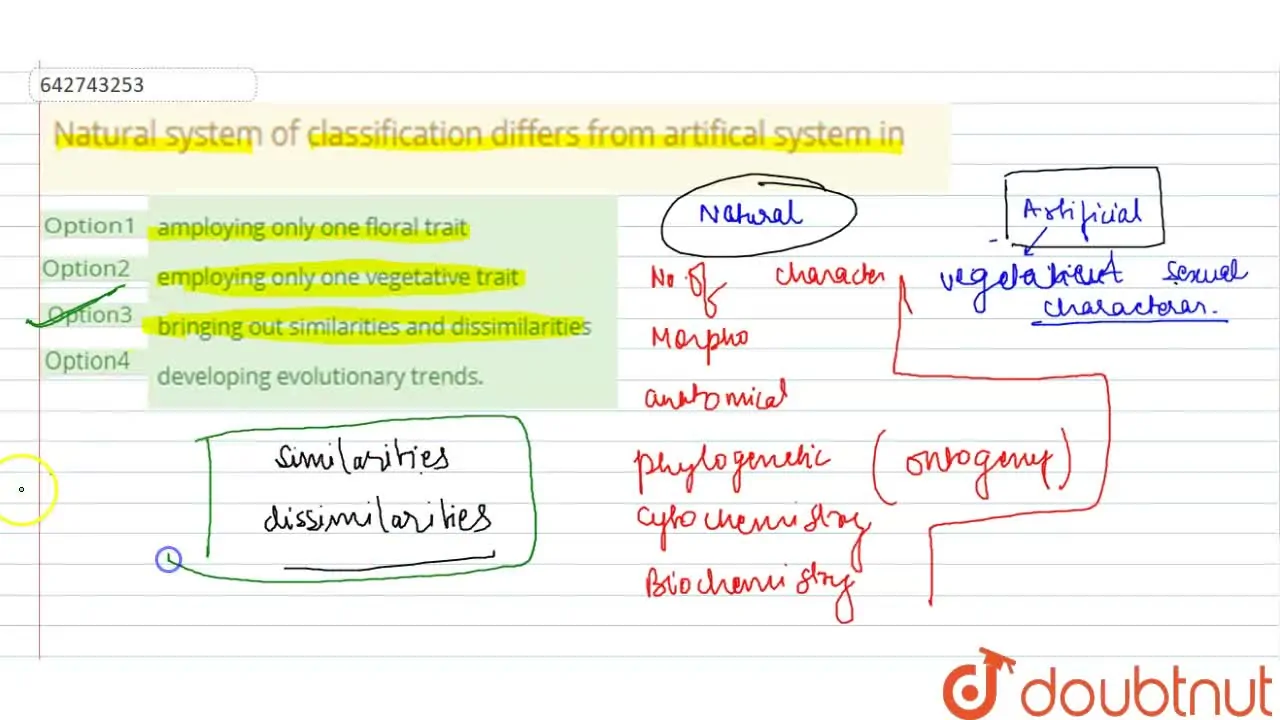
Natural System of Classification This system considers many comparable morphological, anatomical, and other observable characteristics to bring out natural similarities and dissimilarities. It reflects overall affinities but not necessarily evolutionary history.
- Based on multiple traits (vegetative and reproductive).
- Examples: Bentham and Hooker's system for flowering plants (used in many herbaria).
- Advantages: Groups organisms with many shared features; more practical for identification and study.
- Disadvantages: Does not account for phylogeny (evolutionary descent).
Phylogenetic System of Classification Also called cladistic or evolutionary classification, it groups organisms based on evolutionary relationships and common ancestry (phylogeny). It uses evidence from fossils, cytology, biochemistry, and molecular data.
- Reflects descent with modification.
- Modern systems aim for this (e.g., cladograms showing branching patterns).
- Advantages: Scientifically accurate; shows evolutionary trends and history.
- Disadvantages: Requires advanced data; can change with new evidence.

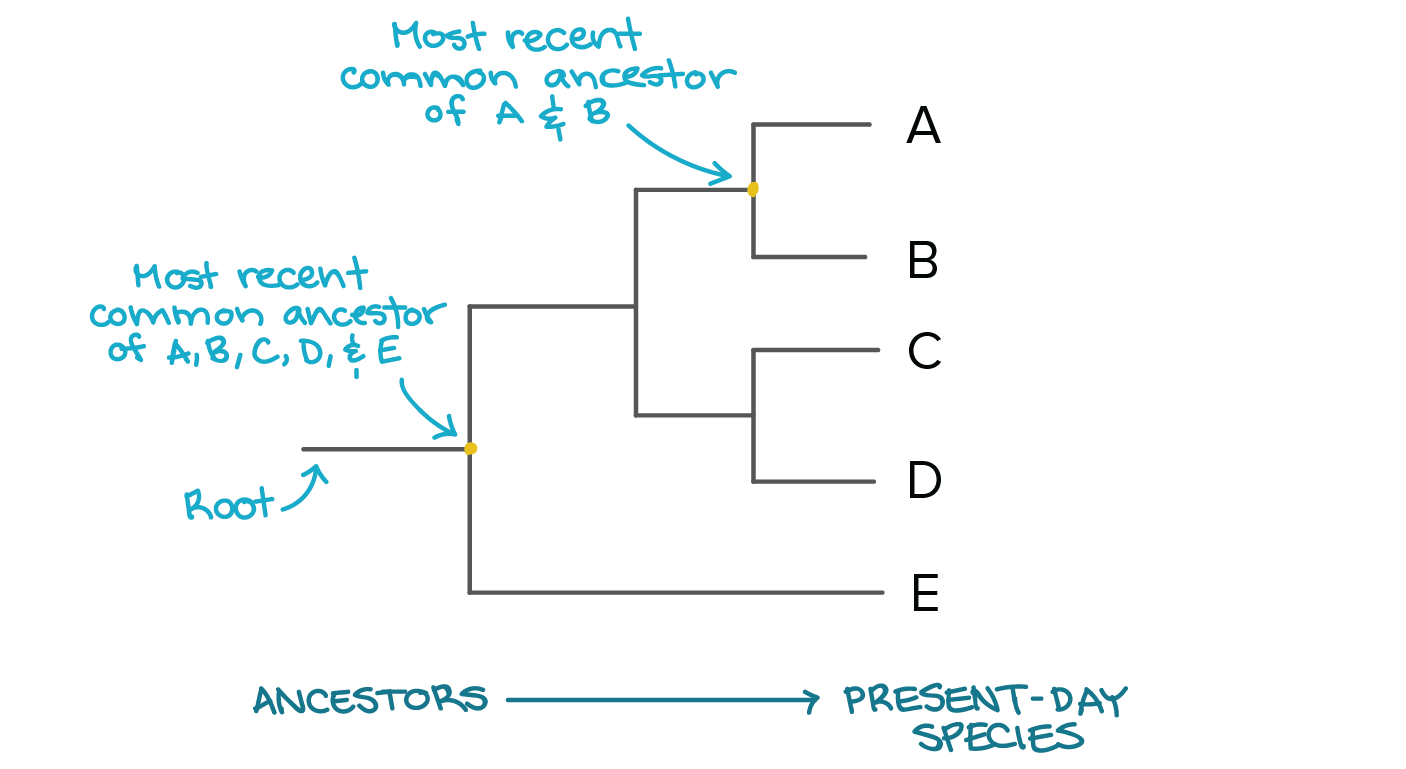
Major Kingdom Systems
- Two-Kingdom System (Carolus Linnaeus, 1758): Plantae (all plants, including fungi and algae) and Animalia. Drawbacks: Grouped prokaryotes with eukaryotes, autotrophs with heterotrophs; ignored unicellular/multicellular differences.
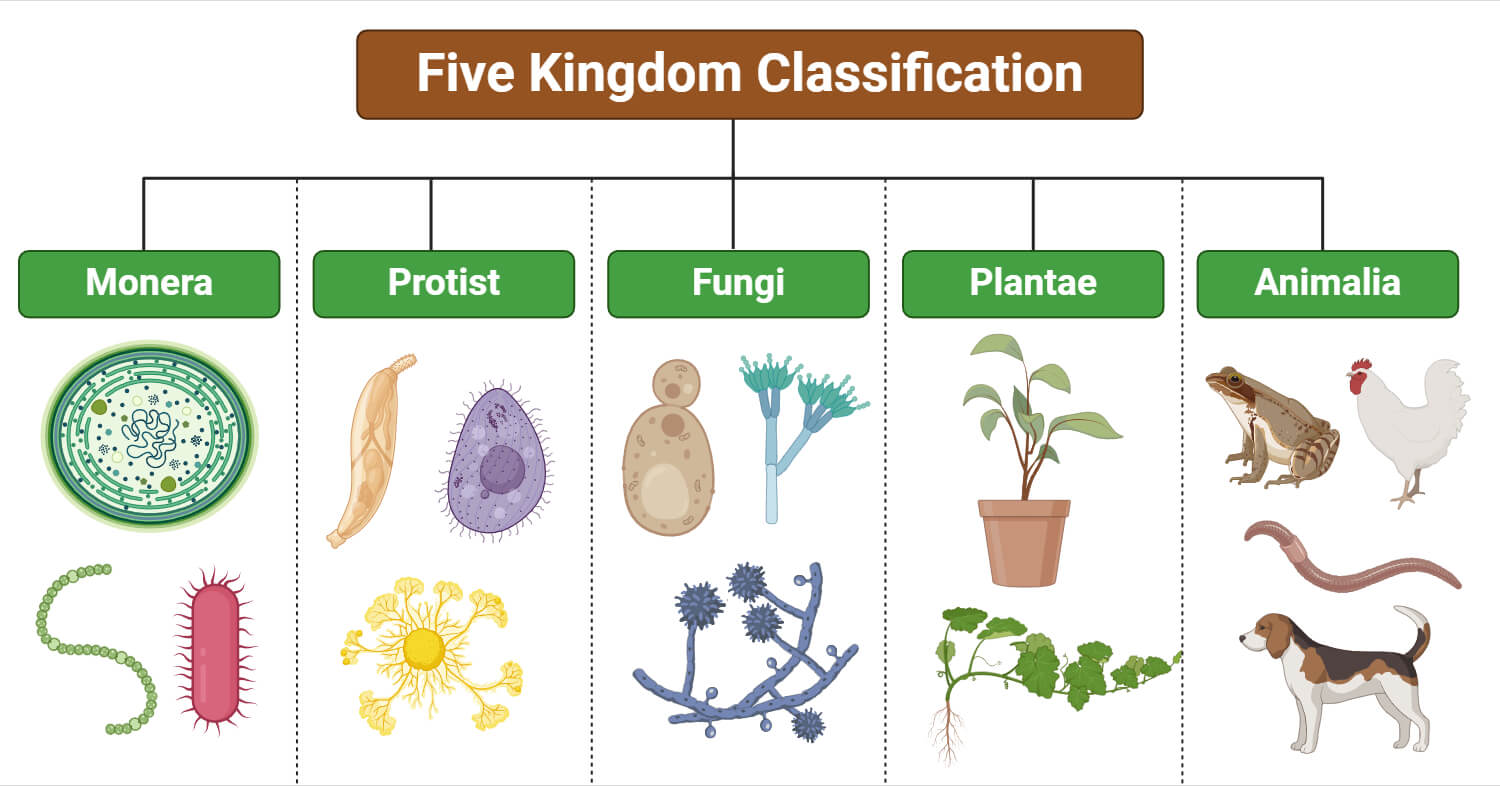
- Five-Kingdom System (R.H. Whittaker, 1969): Monera (prokaryotes), Protista (unicellular eukaryotes), Fungi (heterotrophic with chitin wall), Plantae (autotrophic with cellulose wall), Animalia (multicellular heterotrophs). Criteria: Cell structure, body organization, mode of nutrition, reproduction, phylogenetic relationships. Widely accepted for balancing simplicity and accuracy.


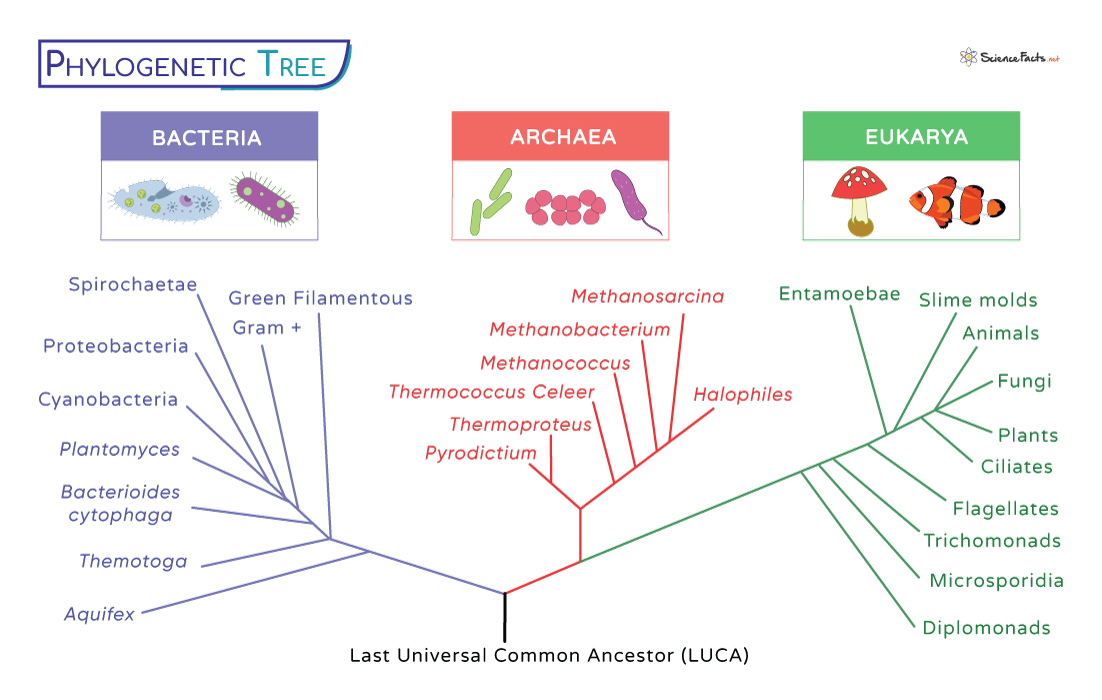
Modern Developments A three-domain system (Carl Woese) divides Monera into Bacteria and Archaea (as domains), with Eukarya as the third (containing Protista, Fungi, Plantae, Animalia). This reflects molecular phylogeny but is advanced beyond basic NCERT scope.
Section 2: Quick Revision, Exam Tips, and Traps
Quick Revision Points
- Artificial: Few superficial traits (e.g., Linnaeus plants); simple but unnatural.
- Natural: Many traits, natural affinities (e.g., Bentham & Hooker); practical but not evolutionary.
- Phylogenetic: Evolutionary relationships; most accurate modern approach.
- Two-kingdom (Linnaeus): Plantae + Animalia; outdated due to mismatches.
- Five-kingdom (Whittaker, 1969): Monera, Protista, Fungi, Plantae, Animalia; based on cell type, nutrition, etc.
- Changes occur with new evidence (e.g., cell structure, phylogeny, molecular data).
Exam Tips
- Compare systems in tabular form: Basis, examples, advantages, limitations.
- Quote NCERT: "Classification systems have undergone several changes" due to new criteria like cell structure and phylogeny.
- Draw diagrams: Phylogenetic tree for evolutionary links; five-kingdom flowchart.
- For UPSC/SSC/RRB/TGPSC: Explain why five-kingdom is better than two-kingdom; mention Whittaker's criteria.
- Use examples: Artificial grouped all trees; five-kingdom separates fungi from plants.
Common Traps to Avoid
- Trap: Saying artificial system is phylogenetic → Wrong; artificial ignores evolution.
- Trap: Confusing natural with phylogenetic → Natural uses many traits but not ancestry; phylogenetic adds evolutionary history.
- Trap: Stating five-kingdom is the final system → It evolves (e.g., three domains proposed).
- Trap: Including viruses in kingdoms → Viruses are acellular, not in Whittaker's system.
- Trap: Forgetting criteria for Whittaker → Cell structure, body organization, nutrition, reproduction, phylogeny.
Section 3: Previous Asked Questions-Answers and Expected Questions-Answers
Previous/Frequently Asked Questions (NCERT-based, Competitive Style)
- Discuss how classification systems have undergone several changes over a period of time. Answer: Early artificial systems (Aristotle, Linnaeus) used few traits/habitat. Two-kingdom (Linnaeus) inadequate for prokaryotes, unicellular forms. Whittaker's five-kingdom (1969) used multiple criteria including phylogeny. Systems change with new evidence (cell structure, molecular data); now three-domain system exists.
- What are the three types of systems of classification? Answer: Artificial (few superficial traits), Natural (many comparable traits, affinities), Phylogenetic (evolutionary relationships).
- Why was the two-kingdom classification inadequate? Answer: Grouped prokaryotes/eukaryotes, autotrophs/heterotrophs (e.g., fungi with plants), unicellular/multicellular together; ignored nutrition, cell structure differences.
Expected Questions (High Probability for 2026 Exams)
- Explain artificial, natural, and phylogenetic systems of classification with examples (5 marks). Expected: Define each, basis, pros/cons; examples like Linnaeus (artificial), Bentham-Hooker (natural), cladistics (phylogenetic).
- Describe Whittaker's five-kingdom classification and its criteria (tabular, 5 marks). Expected: Kingdoms (Monera to Animalia), table with cell type, nutrition, etc.; advantages over two-kingdom.
- Why have classification systems changed over time? Give reasons (UPSC/SSC style). Expected: New discoveries (prokaryotes, cell walls, phylogeny); better reflects natural/evolutionary relationships.
- Compare two-kingdom and five-kingdom systems (tabular). Expected: Kingdoms, basis, limitations (two-kingdom mismatches vs five-kingdom separation).
- What is phylogenetic classification? Why is it preferred in modern biology? Expected: Based on evolutionary descent; uses fossils, molecular data; shows true relationships and history.