7.1 Basis of Classification
Biology → Biology → CLASSIFICATION → CLASSIFICATION → Five Kingdom Classification | Author: admin | Feb 24, 2026
Section 1:
Introduction to Classification
Living organisms are diverse, and classification helps organize them based on shared characteristics. Early systems included two kingdoms (Plantae and Animalia) by Linnaeus, then three (adding Protista), and four (adding Monera and Fungi). In 1969, R.H. Whittaker proposed the five-kingdom system: Monera, Protista, Fungi, Plantae, and Animalia. This system addresses limitations of earlier ones by considering evolutionary relationships and key features.
The basis of this classification includes:
- Cellular structure (prokaryotic or eukaryotic).
- Body organization (unicellular or multicellular).
- Mode of nutrition (autotrophic or heterotrophic).
- Presence or absence of cell wall.
- Phylogenetic relationships (evolutionary history).
These criteria allow grouping organisms logically, reflecting their complexity from simple to advanced forms. For instance, prokaryotes are separated from eukaryotes, and nutrition differentiates producers from consumers.
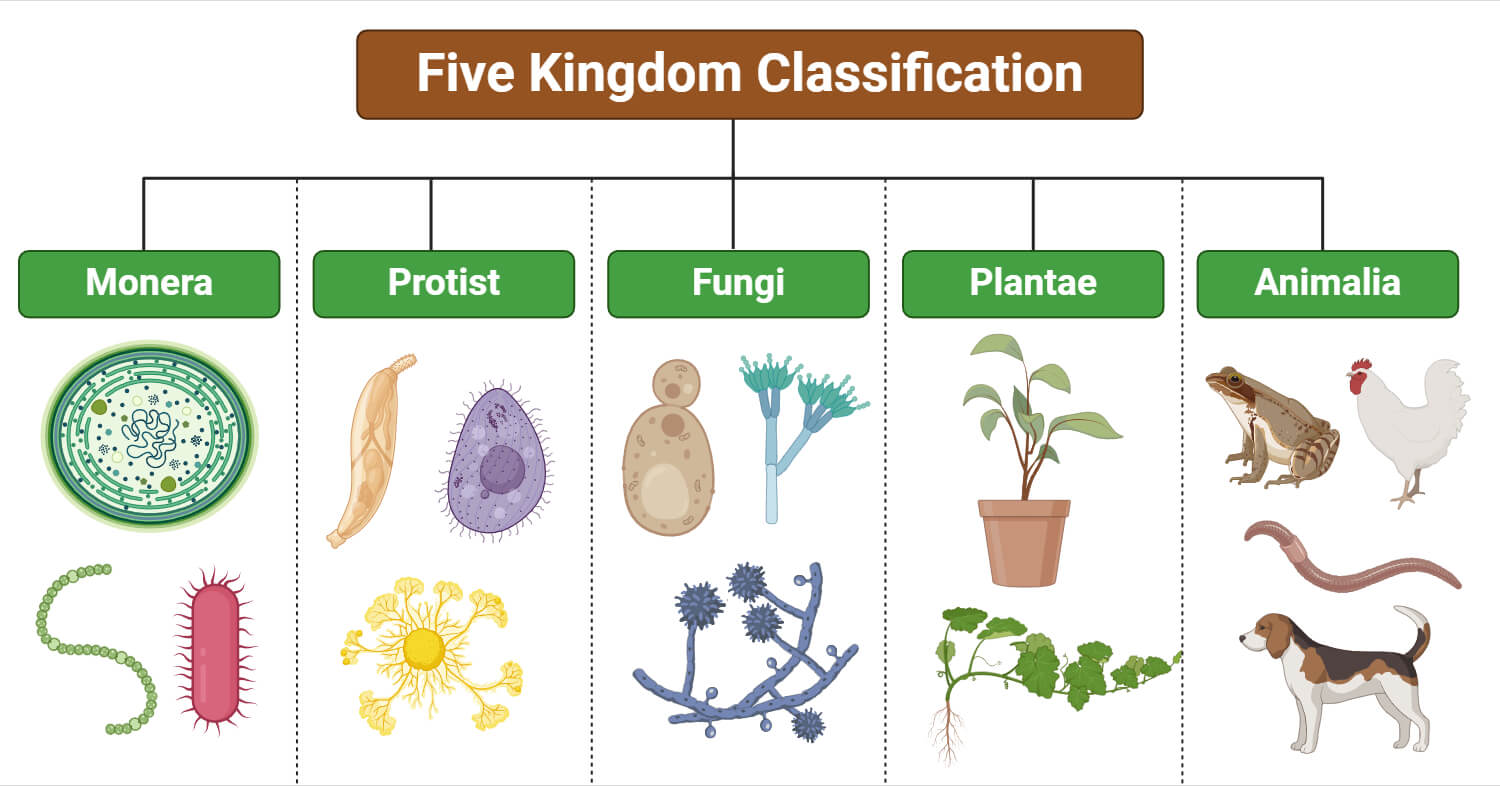
Basis 1: Cellular Structure
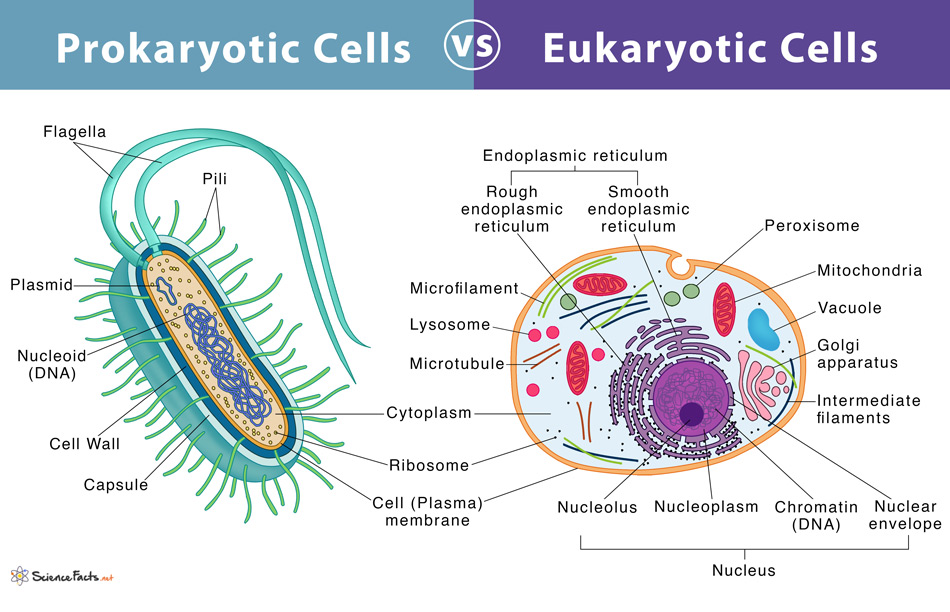
Organisms are classified based on whether their cells are prokaryotic (lacking a true nucleus and membrane-bound organelles) or eukaryotic (having a well-defined nucleus and organelles like mitochondria).
- Prokaryotic cells: Found only in Kingdom Monera (e.g., bacteria). These are simple, with DNA in a nucleoid region, and often have a cell wall made of peptidoglycan. They reproduce asexually via binary fission. Edge case: Some prokaryotes like archaebacteria thrive in extreme environments, showing adaptations like heat resistance.
- Eukaryotic cells: Present in Protista, Fungi, Plantae, and Animalia. These have complex structures, including nucleus, endoplasmic reticulum, and Golgi apparatus. Reproduction can be asexual or sexual. Nuance: Eukaryotes evolved from prokaryotes, adding complexity like mitosis for cell division.
Implications: This basis separates primitive life forms (Monera) from advanced ones, highlighting evolutionary progression. Without this distinction, unicellular eukaryotes like amoeba would be misgrouped with bacteria.
Basis 2: Body Organization
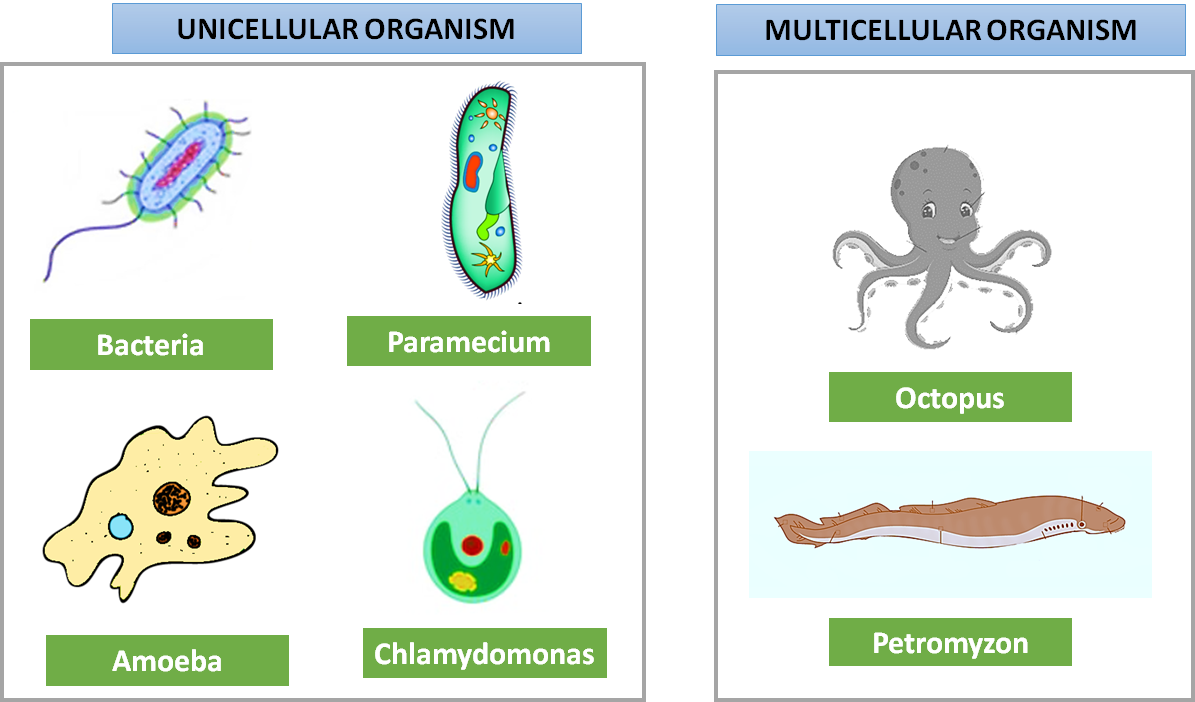
Classification considers if organisms are unicellular (single-celled) or multicellular (many cells with division of labor).
- Unicellular: Common in Monera and Protista (e.g., bacteria, paramecium). All life processes occur in one cell. Related consideration: Colonial forms like Volvox in Protista show early multicellular tendencies but are still classified as unicellular.
- Multicellular: Seen in Fungi, Plantae, and Animalia (e.g., mushrooms, trees, humans). Cells specialize into tissues and organs. Edge case: Some fungi like yeast are unicellular, but the kingdom is mostly multicellular, emphasizing overall trends.
This criterion reflects increasing complexity: unicellular organisms are simpler and often microscopic, while multicellular ones form visible structures. Implications include better adaptation in multicellular forms through specialization, but vulnerability to cell damage.
Basis 3: Mode of Nutrition
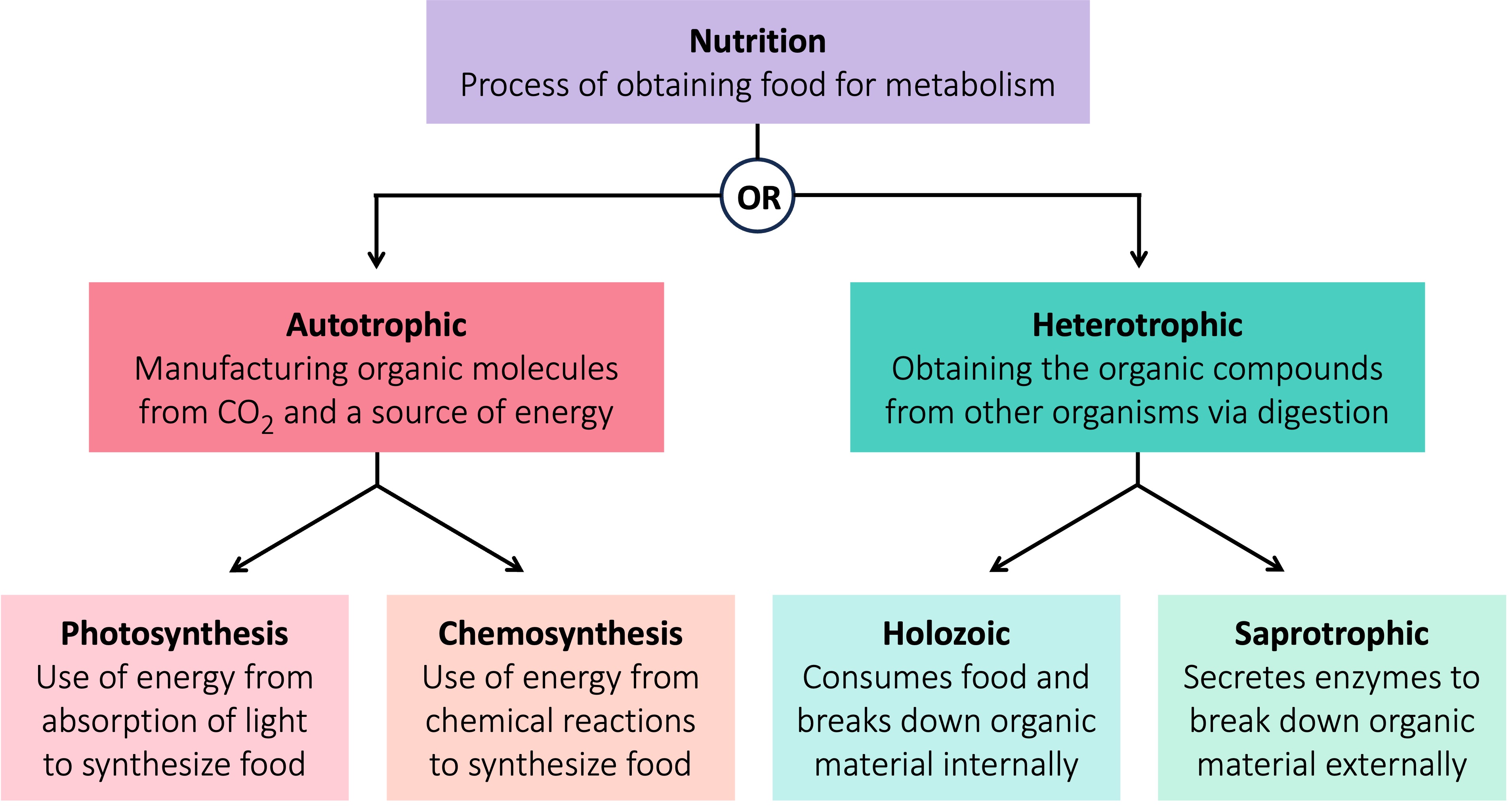
Nutrition mode divides organisms into autotrophs (self-feeders) and heterotrophs (dependent on others).
- Autotrophic: Produce food using energy sources like sunlight (photosynthesis) or chemicals (chemosynthesis). Examples: Plants (Plantae) via chlorophyll, some bacteria (Monera) via chemosynthesis. Subtypes: Photoautotrophs (light-dependent) and chemoautotrophs (chemical-dependent).
- Heterotrophic: Obtain food from external sources. Subtypes include holozoic (ingesting solids, e.g., animals), saprophytic (absorbing decayed matter, e.g., fungi), and parasitic (from hosts, e.g., some protists). Nuance: Mixotrophs like Euglena (Protista) switch modes, placed in Protista for flexibility.
Implications: Autotrophs form the base of food chains, supporting heterotrophs. This basis highlights ecological roles, such as decomposers (fungi) recycling nutrients. Edge case: Carnivorous plants like Venus flytrap are autotrophic but supplement with heterotrophy.
Basis 4: Presence or Absence of Cell Wall
- With cell wall: Monera (peptidoglycan), Fungi (chitin), Plantae (cellulose), some Protista (varied). Provides protection and shape.
- Without cell wall: Animalia, some Protista. Allows flexibility, e.g., movement in animals.
This supports structural classification, correlating with nutrition and environment. Nuance: Cell wall composition varies, aiding sub-classification.
Basis 5: Phylogenetic Relationships
Evolutionary history groups related organisms. Monera is basal, evolving to Protista, then diverging to Fungi, Plantae, and Animalia. This considers fossil evidence and genetic similarities.
Overall, these bases ensure comprehensive grouping, but limitations exist: viruses and viroids are excluded as non-cellular; some organisms like slime molds blur boundaries between kingdoms.
Section 2: Quick Revision, Tips, Traps
Quick Revision
Use this table for a structured overview of the bases:
| Basis | Key Features | Kingdoms Affected | Examples |
|---|---|---|---|
| Cellular Structure | Prokaryotic: No nucleus; Eukaryotic: Nucleus present | Monera (pro); Others (eu) | Bacteria (pro); Amoeba (eu) |
| Body Organization | Unicellular: Single cell; Multicellular: Many cells | Monera/Protista (uni); Fungi/Plantae/Animalia (multi) | Paramecium (uni); Human (multi) |
| Mode of Nutrition | Autotrophic: Self-make food; Heterotrophic: From others | Plantae (auto); Animalia/Fungi (hetero) | Tree (auto); Mushroom (hetero-saprophytic) |
| Cell Wall | Present (varied material); Absent | Monera/Fungi/Plantae (present); Animalia (absent) | Algae (present-cellulose); Dog (absent) |
| Phylogeny | Evolutionary links | All, from Monera to Animalia | Bacteria basal; Animals advanced |
- Key Points: Whittaker's system (1969) uses 5 criteria for 5 kingdoms. Monera: Prokaryotes, unicellular. Protista: Eukaryotic unicellular. Fungi: Heterotrophic with chitin wall. Plantae: Autotrophic multicellular. Animalia: Heterotrophic multicellular no wall.
- Mnemonics: For kingdoms - "Many People Find Parties Awesome" (Monera, Protista, Fungi, Plantae, Animalia). For bases - "Cells Build Nice Cozy Places" (Cellular, Body, Nutrition, Cell wall, Phylogeny).
Exam Tips
- Focus on NCERT diagrams: Draw prokaryotic/eukaryotic cells, nutrition flowcharts in answers for marks.
- Link bases to kingdoms: Always mention 2-3 examples per basis to show depth.
- Compare systems: Know why five-kingdom improves on two-kingdom (e.g., separates fungi from plants due to heterotrophy).
- Practice MCQs: Exams like UPSC/SSC often test "who proposed" or "which kingdom for X organism".
- Time management: For descriptive, structure with bullets/subheadings for clarity.
- Edge cases: Remember mixotrophs in Protista; archaebacteria in Monera for extreme habitats.
Traps to Avoid
- Don't confuse Whittaker (five-kingdom) with Haeckel (three-kingdom) or Copeland (four-kingdom).
- Trap: Viruses not in any kingdom (acellular); don't place them in Monera.
- Common error: Fungi as plants (no - heterotrophic, no chlorophyll); Protista not all autotrophic.
- Avoid overgeneralizing: Not all Monera autotrophic (many heterotrophic); some Protista have cell walls.
- Nuance trap: Phylogenetic basis is evolutionary, not just morphological - questions may test this implication.
- For exams like RRB/JE: Technical questions on bacteria (Monera) vs algae (Protista/Plantae).
Section 3: Previous Asked Questions-Answers and Expected Questions-Answers
Previous Asked Questions-Answers
Based on past UPSC, SSC, RRB, JE, TGPSC, TGLPRB papers (e.g., from 2016-2025 compilations):
- Who proposed the five-kingdom classification? (UPSC Prelims 2018, SSC CGL 2020) Answer: R.H. Whittaker in 1969. It includes Monera, Protista, Fungi, Plantae, Animalia.
- What is the main basis of classification in the five-kingdom system? (SSC CHSL 2019, RRB NTPC 2021) Answer: Cell structure (prokaryotic/eukaryotic), mode of nutrition (autotrophic/heterotrophic), body organization (unicellular/multicellular), cell wall presence, and phylogenetic relationships.
- As per five-kingdom classification, Euglenoids belong to which kingdom? (UPSC CSE 2022, TGPSC Group 1 2023) Answer: Protista (unicellular eukaryotes, mixotrophic nutrition).
- In Whittaker's classification, which kingdom includes organisms without a well-defined nucleus? (SSC MTS 2017, RRB JE 2019) Answer: Monera (prokaryotes like bacteria).
- The five kingdoms under Whittaker's scheme are? (MPSC 2020, TGPSC 2024) Answer: Monera, Protista, Fungi, Plantae, Animalia. (Options often include distractors like Mammalia or Porifera.)
- Which kingdom in five-kingdom classification has saprophytic mode of nutrition? (SSC CGL 2023, TGLPRB Constable 2022) Answer: Fungi (heterotrophic, absorb nutrients from dead matter).
- Name the eukaryotic kingdoms in Whittaker's classification. (UPSC 2021, RRB Group D 2018) Answer: Protista, Fungi, Plantae, Animalia (Monera is prokaryotic).
- Aspergillus belongs to which kingdom in five-kingdom system? (SSC 2024, JE Mains 2020) Answer: Fungi (multicellular, heterotrophic).
- In which year was the five-kingdom classification proposed? (TGPSC 2025 Prelims, RRB 2023) Answer: 1969.
- Which criterion is not a basis for five-kingdom classification? (UPSC 2019, SSC 2022) Answer: Asexual reproduction (main bases are cell structure, nutrition, etc.; reproduction is secondary).
Expected Questions-Answers
For 2026 exams (UPSC, SSC, RRB, JE, TGLPRB, TGPSC), anticipate variations on basics, with focus on NCERT alignments and edge cases:
- Explain one limitation of Whittaker's five-kingdom classification. (Expected in UPSC Mains 2026) Answer: It does not account for viruses/viroids (acellular) or clearly separate unicellular/multicellular boundaries (e.g., slime molds in Protista but fungus-like).
- Differentiate prokaryotic and eukaryotic cells as per five-kingdom basis. (Expected in SSC CGL 2026) Answer: Prokaryotic: No nucleus, no organelles, e.g., bacteria (Monera). Eukaryotic: Nucleus present, organelles like mitochondria, e.g., amoeba (Protista). Implication: Evolutionary advancement.
- Why are fungi placed in a separate kingdom? (Expected in RRB JE 2026) Answer: Heterotrophic nutrition (saprophytic/parasitic), chitin cell wall, no chlorophyll - unlike plants (autotrophic, cellulose wall).
- Classify Paramecium and Chlamydomonas in five-kingdom system. (Expected in TGPSC Group 2 2026) Answer: Both in Protista (unicellular eukaryotes); Paramecium heterotrophic, Chlamydomonas autotrophic.
- How does mode of nutrition influence kingdom placement? Give examples. (Expected in TGLPRB 2026) Answer: Autotrophic: Plantae (e.g., mango tree). Heterotrophic: Animalia (e.g., lion - holozoic), Fungi (e.g., bread mold - saprophytic). Mixotrophic: Protista (e.g., Euglena).
- Which kingdom includes chemoautotrophs? (Expected in UPSC Prelims 2026) Answer: Monera (e.g., nitrifying bacteria use chemicals for energy).
- Compare two-kingdom and five-kingdom systems. (Expected in SSC CHSL 2026) Answer: Two-kingdom (Plantae/Animalia) ignores prokaryotes/unicellular eukaryotes; five-kingdom adds Monera/Protista/Fungi for better accuracy based on cell type/nutrition.
- What phylogenetic insight does five-kingdom provide? (Expected in RRB NTPC 2026) Answer: Shows progression: Monera (basal) → Protista → divergence to Fungi/Plantae/Animalia, based on evolutionary evidence.
- Lichens are symbiotic between which kingdoms? (Expected in TGPSC 2026) Answer: Fungi (mycobiont) and algae (phycobiont from Protista/Plantae) - not a separate kingdom.
- Why is yeast in Fungi despite being unicellular? (Expected in JE 2026) Answer: Heterotrophic, chitin wall, eukaryotic - aligns with kingdom criteria; body organization allows exceptions.