Unit 2.3: Agriculture, Diet & Animal Husbandry
Indian History → Indian History → Ancient History → Ancient History → The Bronze Age (Indus Valley Civilization) | Author: admin | Feb 10, 2026
Type 1 – Detailed Notes (Book + Bullet + Table + Flowchart + Highlight)
Introduction & Significance
The agriculture, diet, and animal husbandry of the Indus Valley Civilization (IVC), flourishing from 3300–1300 BCE, formed the economic backbone of this Bronze Age society. Centered on the fertile Indus River floodplains, IVC people practiced advanced farming using flood irrigation, domesticated crops like wheat and barley, and reared animals for food, labor, and trade. This sustained urban centers with populations up to 40,000, enabling surplus for commerce without major warfare. Significance lies in its multi-cropping system (rabi and kharif), early cotton cultivation (world's first), and mixed economy blending farming with herding, reflecting adaptation to monsoons and rivers. Diet was diverse, incorporating grains, fruits, dairy, and meat, indicating a balanced, possibly semi-vegetarian lifestyle. For SSC, JE, RRB, and State PSC exams, focus on crop-site linkages (e.g., rice at Lothal), tools like ploughs, and domesticated animals, often tested for economic and cultural insights.
Chronological Timeline
- 7000–5000 BCE (Pre-Harappan/Mehrgarh Phase): Earliest farming; wheat, barley, cotton; animal domestication (cattle, sheep).
- 3300–2600 BCE (Early Harappan): Expansion of agriculture; flood-based irrigation; peas, sesame added.
- 2600–1900 BCE (Mature Harappan): Peak; multi-cropping; rice at Lothal; ploughed fields at Kalibangan.
- 1900–1300 BCE (Late Harappan): Decline due to aridification; shift to drought-resistant millets; reduced husbandry.
- Post-1300 BCE: Transition to Vedic period; continuity in crops like rice, wheat.
Concept Explanation / Deep Dive
IVC agriculture relied on the Indus River's annual floods for natural irrigation, supplemented by wells and possible canals, enabling surplus production in a semi-arid region. Core concept: Double Cropping—rabi (winter: wheat, barley) sown post-flood, kharif (summer: millets, rice) in embanked fields. Animal husbandry integrated with farming; cattle provided draught power, dairy, and meat. Diet was mixed: grains as staples, fruits/vegetables for nutrition, animal products for protein. Influenced by monsoons, this system supported urbanism but declined with climate shifts (weakened rains ~1900 BCE). Site-tool-culture linkage: Kalibangan's ploughed fields (tool: wooden plough) reflect agrarian culture; Mehrgarh's animal bones link husbandry to early settlements.
Key Terminology Box (Meanings & Definitions)
- Rabi Crops: Winter-sown, flood-irrigated (e.g., wheat, barley).
- Kharif Crops: Summer-sown, rain-dependent (e.g., rice, millets).
- Zebu Cattle: Humped Indian cattle (Bos indicus), domesticated for labor/milk.
- Floodplain Agriculture: Farming using river floods for silt and water.
- Domestication: Taming wild species for human use (e.g., jungle fowl to chickens).
- Surplus Economy: Excess production enabling trade/urban growth.
Highlight: IVC = "Wheat + Cattle" – main crop and animal for exam recall.
Important Archaeological / Factual Details
- Crop Evidence: Carbonized grains at Harappa (wheat/barley); rice husks at Lothal/Rangpur.
- Tools Found: Terracotta plough model at Banawali; sickles at Mohenjo-daro.
- Animal Remains: 70–80% cattle/buffalo bones at sites; sheep/goats local, cattle sometimes imported.
- Diet Clues: Fish bones, animal figurines; no pork taboo.
- Innovations: Cotton ginning (world's earliest); dairy from cattle.
Tools, Lifestyle, Culture
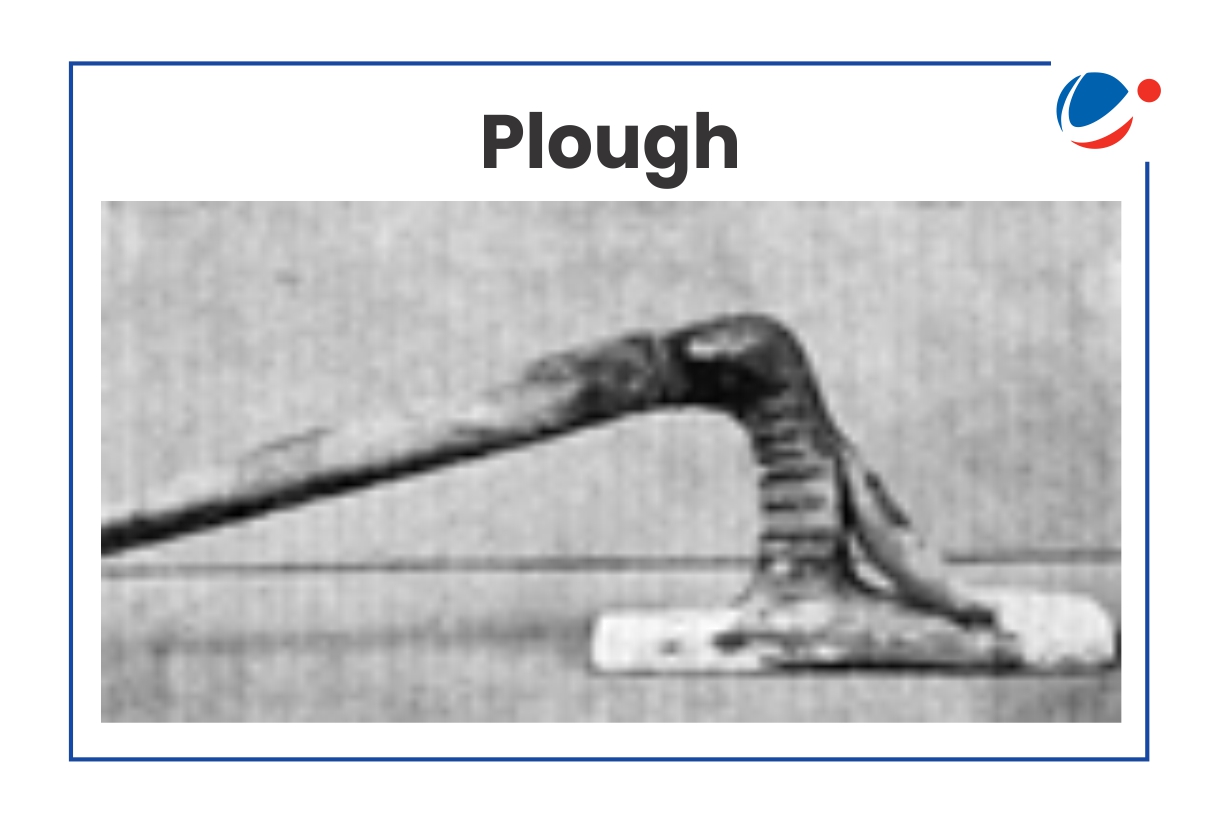
- Tools: Wooden ploughs (Kalibangan fields), bronze sickles, querns for grinding.
- Lifestyle: Agrarian; flood-dependent farming; herding for mobility; diet: grains (80%), dairy/meat (20%), fruits.
- Culture: Animal worship (bull seals); surplus for trade; no large farms, community-based.
Site–Tool–Culture Linkage:
- Mehrgarh: Sickles + cattle bones ? Early husbandry culture.
- Kalibangan: Ploughed fields + wheat ? Agrarian ritual (fire altars).
- Lothal: Rice grains + docks ? Trade-linked farming.
Frequently Asked Exam Facts
- First cotton: IVC (exported to Mesopotamia).
- Horse: Rare, late (Surkotada bones).
- No iron; bronze tools for farming.
- Diet: Mixed, but cattle primary (70% faunal remains).
- Regional: Northwest rabi-dominant; Gujarat kharif.
Comparison Tables / Charts
| Aspect | Crops | Animals | Tools/Sites |
|---|---|---|---|
| Northwest (Harappa) | Wheat, barley, peas | Cattle, sheep | Sickles; granaries |
| Sindh (Mohenjo-daro) | Sesame, dates | Buffalo, pigs | Querns; wells |
| Gujarat (Lothal) | Rice, millets, cotton | Goats, elephants | Dockyards; rice fields |
| Pre-Harappan (Mehrgarh) | Early wheat, cotton | Cattle, goats | Stone tools; herding pens |
Solved Example Questions
- Question: What was the backbone of the IVC economy? Answer & Explanation: Agriculture. (Explanation: Surplus from floods/wheat supported cities; frequent MCQ.)
- Question: At which site is evidence of ploughed fields found? Answer & Explanation: Kalibangan. (Explanation: Furrows indicate wooden ploughs; site-tool link.)
- Question: Which crop's earliest evidence is from IVC? Answer & Explanation: Cotton. (Explanation: Exported; tests innovation.)
Flowchart Summary
Start: Pre-Harappan (~7000 BCE) ? Early Domestication (Cattle, Wheat at Mehrgarh)
?
Mature Phase (2600 BCE) ? Flood Irrigation ? Rabi Crops (Wheat/Barley) + Kharif (Rice/Millets)
?
Integration: Tools (Ploughs) ? Husbandry (Cattle for Draught) ? Surplus Diet (Grains + Meat)
? (Branches)
Culture: Trade (Cotton) + Rituals (Bull Worship)
Decline (~1900 BCE): Aridification ? Shift to Millets
?
End: Vedic Continuity (Rice/Wheat)
Spatial Context (Indian Archaeological Sites)
- Northwest: Mehrgarh (Balochistan)—early farming; Harappa (Punjab)—wheat granaries.
- Rajasthan: Kalibangan—ploughed fields; Banawali—plough model.
- Gujarat: Lothal—rice; Surkotada—horse bones; Dholavira—reservoirs for irrigation.
- Other: Rangpur (Gujarat)—millets; Rakhigarhi (Haryana)—animal remains. Highlight: Sites along rivers for floods—key for maps.
Ultra-Short Exam Capsule
- Agriculture: Wheat/barley main; Tools: Ploughs; Sites: Kalibangan (fields), Lothal (rice); Animals: Cattle primary; Diet: Mixed grains/meat; Link: Surplus economy.
Type 2 – Quick Revision & Exam Tricks
- Highlights & Tricky Points: Agriculture flood-based (not canals mainly); horse rare (not absent); diet mixed (not purely vegetarian).
- Memory Aids/Mnemonics: "Wheat Barley Cotton Rice" ? WBCR for main crops. "Cattle Sheep Goat Pig" ? CSGP for animals.
- Quick Bullet-Style Revision:
- Timeline: 7000 BCE Mehrgarh start; 2600 BCE peak.
- Crops: Rabi (wheat/barley), Kharif (rice/millets); Cotton first.
- Tools: Ploughs (Kalibangan), sickles.
- Animals: Cattle (70%), sheep/goats; Rare: Horse, elephant.
- Diet: Grains staple; Meat from domesticated; Fish common.
- Linkage: Site (Mehrgarh) ? Tool (sickles) ? Culture (herding).
- Common Exam Traps: Confusing rice as main (it's minor); Mehrgarh as IVC (it's pre).
- Confusing Concepts: Zebu vs. buffalo (both domesticated); Surplus vs. subsistence (IVC surplus).
- Key Terminology/Sites/Tools: Rabi/Kharif, Domestication; Mehrgarh-Kalibangan-Lothal; Ploughs-Sickles.
Type 3 – PYQs & Expected Questions
Previous Year Questions
- SSC CGL: Which was the backbone of Indus economy? Final Answer: Agriculture.
- RRB NTPC: The earliest evidence of animal domestication and agriculture in India has come from? Final Answer: Mehrgarh.
- SSC JE: Evidence of rice in Indus Valley Civilization is found at? Final Answer: Lothal.
- UPPSC: Which animal was commonly depicted in the art of the Indus Valley Civilization? Final Answer: Bull.
- SSC CGL: Which crop's earliest cultivation is associated with IVC? Final Answer: Cotton.
Expected/High-Probability Questions
- At which IVC site were ploughed fields discovered? Final Answer: Kalibangan.
- What were the main crops of the Indus Valley Civilization? Final Answer: Wheat and barley.
- Name an animal domesticated in IVC for draught power. Final Answer: Cattle.
- Which site provides evidence of early cotton cultivation? Final Answer: Mehrgarh.
- Compare the diet of IVC with Vedic period. Final Answer: IVC: Mixed grains/meat; Vedic: Similar but more pastoral.
- Evidence of horse in IVC is found at? Final Answer: Surkotada.