Unit 1.4: Prehistoric Rock Art & Bhimbetka
Indian History → Indian History → Ancient History → Ancient History → The Stone Age | Author: admin | Feb 10, 2026
Introduction & Significance
Prehistoric rock art in India, exemplified by the Bhimbetka rock shelters, represents one of the earliest forms of human expression, dating back to the Upper Palaeolithic period around 30,000 years ago. Located in Madhya Pradesh, Bhimbetka is a UNESCO World Heritage Site since 2003, featuring over 700 shelters with paintings that span from Palaeolithic to Medieval times. This art provides invaluable insights into prehistoric life, beliefs, and environmental adaptations, showing evolution from simple animal depictions to complex social scenes. Its significance for exams lies in illustrating cultural continuity in Stone Age India, linking art to tools and lifestyles, and highlighting human creativity before written history. Bhimbetka, discovered in 1957 by V.S. Wakankar, is India's largest prehistoric art repository, often tested for its chronological layers and thematic elements in SSC, JE, RRB, and State PSC questions.
Chronological Timeline
- ~30,000–10,000 BCE (Upper Palaeolithic): Earliest paintings; large animal figures in green/red.
- ~10,000–4,000 BCE (Mesolithic): Peak period; hunting, dancing scenes; smaller, detailed humans/animals.
- ~4,000–2,000 BCE (Chalcolithic): Agricultural motifs, warriors on horses; introduction of metals implied.
- ~2,000 BCE–500 CE (Historic): Religious symbols, chariots; overlaps with early historic art.
- 500–1500 CE (Medieval): Decorative, abstract designs; continuity with local tribes.
- Regional Note: Bhimbetka shows continuous occupation; similar art at Pachmarhi, Adamgarh from Mesolithic onwards.
Concept Explanation / Deep Dive
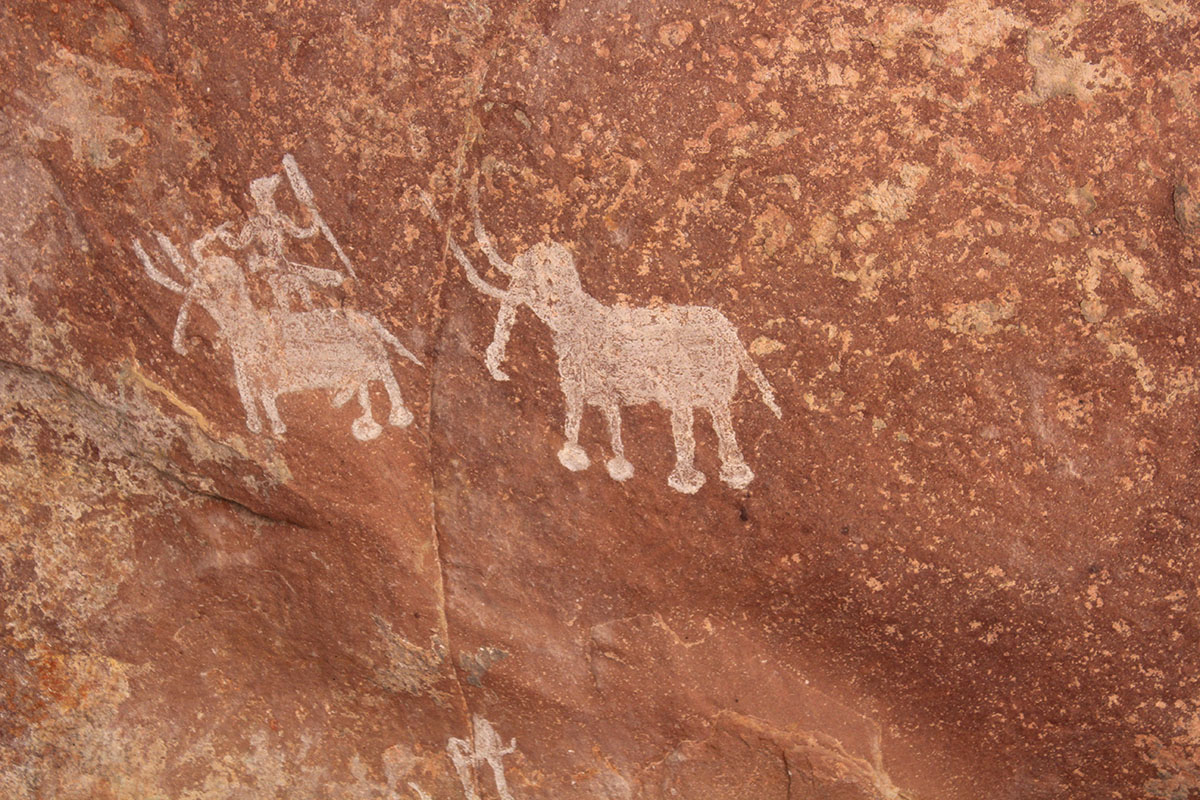
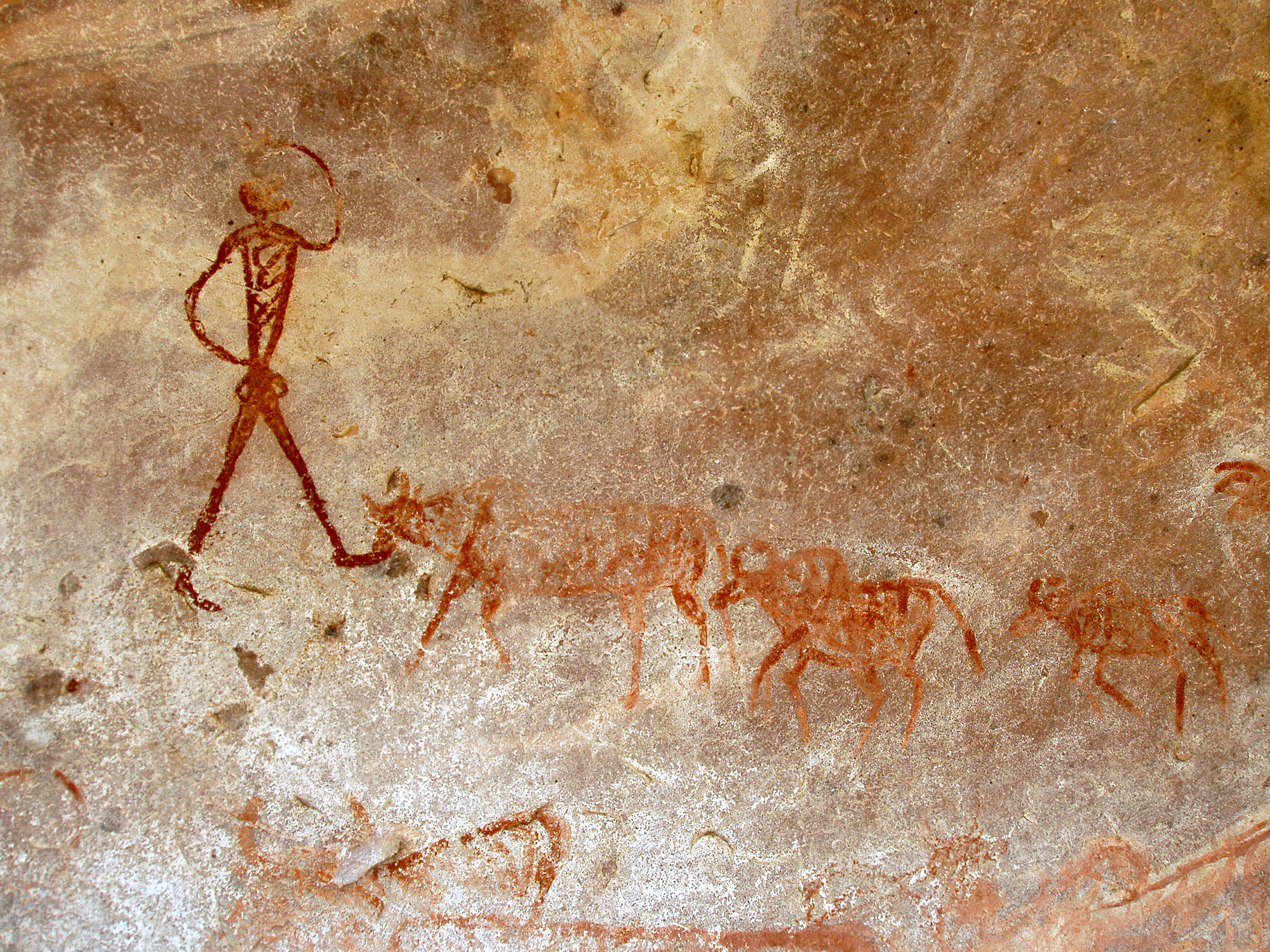
Prehistoric rock art refers to paintings and engravings on cave walls/shelters created by early humans using natural pigments, serving as records of daily life, rituals, and environment. At Bhimbetka, art evolved with Stone Age phases: Palaeolithic focused on survival (large animals), Mesolithic on community (group activities), and later periods on society (war/agriculture). Key concept: Symbolic Representation—art not just decorative but communicative, possibly for hunting magic or storytelling. Influenced by post-Ice Age climate, it links to tool use (e.g., microliths in Mesolithic layers near art sites). Bhimbetka's quartzite shelters preserved art due to natural overhangs; pigments (ochre, manganese) endured millennia. Site-tool-culture linkage: Paintings depict tools like bows/arrows, reflecting Mesolithic hunter-gatherer culture.
Key Terminology Box (Meanings & Definitions)
- Rock Art: Prehistoric paintings/engravings on rock surfaces, including petroglyphs (carvings) and pictographs (paintings).
- Petroglyph: Rock engravings made by pecking or incising; rare at Bhimbetka.
- Ochre: Natural earth pigment (red/yellow) used in paintings; symbolizes blood/life.
- Superimposition: Overlapping layers of paintings from different periods, showing chronological evolution.
- Zoomorphic: Animal-like figures; common in Palaeolithic art.
- Anthropomorphic: Human-like figures; dominant in Mesolithic scenes.
Highlight: Bhimbetka = "Bhim's Seat" (mythical); remember as "Bhim's Betka" for UNESCO site linkage.
Important Archaeological / Factual Details
- Discovery: V.S. Wakankar in 1957; systematic study by ASI.
- Number of Shelters: 700+; 400+ with art; spread over 10 km.
- Pigments: Vegetable/mineral colors (red from haematite, white from lime, green from chalcedony).
- Themes: Animals (70%), humans (20%), geometric (10%); no landscapes.
- Preservation: Natural rock niches; some cup marks from 100,000 years ago.
Tools, Lifestyle, Culture
- Tools: Associated with art—Palaeolithic hand-axes near early art; Mesolithic microliths/bows in hunting scenes.
- Lifestyle: Hunter-gatherers (Mesolithic); semi-sedentary with seasonal camps; diet from depicted animals.
- Culture: Ritualistic (dancing for fertility/hunts); community-oriented; possible shamanism in abstract figures.
Site–Tool–Culture Linkage:
- Bhimbetka (Zoo Rock): Microliths + hunting paintings ? Mesolithic group culture.
- Auditorium Cave: Hand-axes + animal art ? Palaeolithic survival focus.
- Boar Rock: Spears + battle scenes ? Chalcolithic warrior culture.

Frequently Asked Exam Facts
- Oldest Indian rock art: Bhimbetka (Upper Palaeolithic).
- Colors endure due to inner wall placement; no blue used.
- Human figures stylized (stick-like in Mesolithic).
- No domesticated animals in early phases.
- Links to tribal art (Gond, Bhil) today.
Comparison Tables / Charts
| Period | Art Style | Themes | Colors | Tools Linked |
|---|---|---|---|---|
| Palaeolithic | Large, linear animals | Survival (rhinos, bears) | Green, red | Hand-axes |
| Mesolithic | Small, group scenes | Hunting, dancing | Red, white | Microliths |
| Chalcolithic | Warriors, agriculture | Social (chariots, battles) | Yellow, green | Copper tools |
| Historic/Medieval | Decorative, religious | Symbolic (tree gods) | Multi-color | Iron implements |
Solved Example Questions
- Question: Who discovered the Bhimbetka rock shelters? Answer & Explanation: V.S. Wakankar. (Explanation: In 1957; key for discovery-based questions.)
- Question: Which period dominates the rock art at Bhimbetka? Answer & Explanation: Mesolithic. (Explanation: Most paintings from 10,000–4,000 BCE; linkage to microliths.)
- Question: What is the primary theme of prehistoric rock art in India? Answer & Explanation: Hunting and animals. (Explanation: Reflects lifestyle; exam trick—animal dominance.)
Flowchart Summary
Start: Upper Palaeolithic (~30K BCE) ? Large Animal Art (Survival)
?
Mesolithic Shift (~10K BCE) ? Group Hunting/Dancing (Community)
?
Chalcolithic (~4K BCE) ? Warriors/Agriculture (Society)
? (Branches)
Historic (~2K BCE) ? Religious Motifs (Beliefs)
Medieval (500 CE) ? Abstract Designs (Continuity)
?
End: Modern Tribal Links (Gonds)
Spatial Context (Indian Archaeological Sites)
- Central India: Bhimbetka (MP)—main hub; Adamgarh (MP)—similar Mesolithic art; Pachmarhi (MP)—hill shelters.
- North India: Lakhudiyar (Uttarakhand)—animal engravings; Morhana Pahar (UP)—red ochre figures.
- South India: Edakkal (Kerala)—petroglyphs; Kupgal (Karnataka)—rock gongs/art.
- East India: Kaimur Hills (Bihar)—hunting scenes. Highlight: Bhimbetka in Vindhya Range; river proximity aided preservation—map questions focus.
Ultra-Short Exam Capsule
- Site: Bhimbetka (MP); Art: 30K BCE–Medieval; Themes: Hunting/Animals; Link: Mesolithic microliths + group culture.
Type 2 – Quick Revision & Exam Tricks
- Highlights & Tricky Points: Bhimbetka spans multiple periods—tricky: Most art Mesolithic, not Palaeolithic; superimposition shows layers.
- Memory Aids/Mnemonics: "V.S. Wakankar Discovered Bhim's Art in 1957" ? VSW-DBA-1957. "Palaeo Large Animals, Meso Small Groups" for styles.
- Quick Bullet-Style Revision:
- Timeline: 30K BCE (Palaeo)–Medieval; Discovery: Wakankar 1957.
- Art: Paintings (pictographs); Themes: Animals, hunts, dances.
- Sites: Bhimbetka (700 shelters); Colors: Red/white/green.
- Culture: Ritual/hunting; Tools: Microliths in Mesolithic.
- Linkage: Site (Bhimbetka) ? Tool (bows) ? Culture (dancing).
- Common Exam Traps: Confusing with Ajanta (Buddhist, historic); forgetting UNESCO 2003.
- Confusing Concepts: Petroglyph vs. Pictograph (engraving vs. painting); Bhimbetka has mostly paintings.
- Key Terminology/Sites/Tools: Rock Art, Superimposition, Ochre; Bhimbetka-Pachmarhi-Adamgarh; Hand-axes (Palaeo), Microliths (Meso).
Type 3 – PYQs & Expected Questions
Previous Year Questions
- SSC GD 2019: Bhimbetka, a world heritage site, is known for: Final Answer: Prehistoric rock shelters.
- SSC CGL (similar pattern): The Bhimbetka rock shelters, known for prehistoric cave paintings, are located in which of the following states of India? Final Answer: Madhya Pradesh.
- UPPSC/State PSC: Bhimbetka, a noted site of the Paleolithic period, is located in which state of India? Final Answer: Madhya Pradesh.
- SSC MTS/GD: Which of the following places is famous for prehistoric paintings? Final Answer: Bhimbetka.
- RRB JE: The ancient archaeological site Bhimbetka rock shelters are located in? Final Answer: Madhya Pradesh.
Expected/High-Probability Questions
- Who discovered the Bhimbetka rock shelters in 1957? Final Answer: V.S. Wakankar.
- In which period are the majority of Bhimbetka paintings classified? Final Answer: Mesolithic.
- What is the primary pigment used in prehistoric rock art at Bhimbetka? Final Answer: Ochre.
- Name the UNESCO World Heritage Site famous for Indian prehistoric rock art. Final Answer: Bhimbetka.
- Compare the themes of Palaeolithic and Mesolithic rock art at Bhimbetka. Final Answer: Palaeolithic: Large animals; Mesolithic: Hunting groups.
- Which tool technology is linked to the Mesolithic paintings at Bhimbetka? Final Answer: Microliths.