Unit 2.2: Town Planning & Drainage Systems
Indian History → Indian History → Pre-History → Pre-History → The Bronze Age (Indus Valley Civilization) | Author: admin | Feb 10, 2026
Introduction & Significance
The town planning and drainage systems of the Indus Valley Civilization (IVC) exemplify one of the most advanced urban designs in ancient history, dating from 2600 BCE to 1900 BCE during the Mature Harappan phase. Characterized by grid-patterned streets, standardized baked bricks, and sophisticated sanitation, these features reflect a highly organized society focused on hygiene, efficiency, and public welfare. Major sites like Mohenjo-daro and Harappa showcase divided cities into citadels (upper town for elites/public buildings) and lower towns (residential areas), with no evidence of palaces or forts, suggesting egalitarian planning. The drainage system, with covered brick-lined channels, manholes, and house connections, prevented flooding and disease, far superior to contemporary Mesopotamian or Egyptian setups. For SSC, JE, RRB, and State PSC exams, this unit is vital for questions on urban innovation, site-specific features, and comparisons, emphasizing how planning linked to lifestyle and culture in a riverine environment.
Chronological Timeline
- 3300–2600 BCE (Early Harappan): Proto-urban planning emerges; simple drainage in sites like Mehrgarh.
- 2600–1900 BCE (Mature Harappan): Peak town planning; grid cities, advanced drainage at Mohenjo-daro, Harappa.
- 1900–1300 BCE (Late Harappan): Decline; planning persists but simplifies, e.g., at Rangpur.
- 1920s Excavations: Mohenjo-daro (1922) reveals Great Bath and drains; Harappa (1921) shows grid streets.
- Post-1950s: Kalibangan (1960s) and Dholavira (1990s) highlight regional variations in reservoirs and ploughed fields.
Concept Explanation / Deep Dive
Town planning in IVC involved systematic urban design with streets oriented north-south and east-west, intersecting at right angles to form a grid, facilitating ventilation and flood control in monsoon-prone areas. Key concept: Gridiron Layout—dividing cities into blocks (e.g., 12x6 at Mohenjo-daro), with wide main streets (up to 10m) and narrower lanes. Drainage was integral, channeling wastewater from homes via terracotta pipes to covered street drains, then to soak pits outside the city, preventing contamination. This hygiene-focused system supported dense populations (e.g., 40,000 in Mohenjo-daro). Influenced by the Indus River's floods, planning emphasized baked bricks (ratio 4:2:1) for durability. Site-tool-culture linkage: Mohenjo-daro's Great Bath (public ritual) connects to drainage (hygiene culture), reflecting a society prioritizing communal well-being over hierarchy.
Key Terminology Box (Meanings & Definitions)
- Citadel: Elevated western part of cities for public buildings like granaries or baths.
- Lower Town: Eastern residential area with grid streets and houses.
- Gridiron Pattern: Streets crossing at 90 degrees, forming rectangular blocks.
- Baked Bricks: Fired clay bricks (standard size 28x14x7 cm) used for construction.
- Manholes: Inspection chambers in drains for maintenance.
- Soak Pits: Underground pits for wastewater absorption outside cities.
Highlight: IVC Planning = "Grid + Drains" – mnemonic for grid streets and advanced drainage in exams.
Important Archaeological / Factual Details
- Brick Standardization: Uniform size across sites; ratio 4:2:1 ensured stability.
- Street Widths: Main roads 9–10m; lanes 1.5–3m; no encroachments.
- House Features: Multi-roomed (up to 3 stories); courtyards, wells, bathrooms connected to drains.
- Public Structures: Great Bath (Mohenjo-daro: 12x7x2.5m, waterproof); granaries (Harappa: 6 rows).
- Regional Variations: Dholavira had reservoirs; Lothal dockyard integrated with drains.
Tools, Lifestyle, Culture
- Tools: Baked bricks, terracotta pipes, lime mortar; no iron tools, bronze for utensils.
- Lifestyle: Urban, hygienic; daily bathing, waste management; agriculture supported by planning.
- Culture: Egalitarian, no palaces; public baths suggest rituals; trade via planned ports.
Site–Tool–Culture Linkage:
- Mohenjo-daro: Baked bricks + grid drains ? Hygiene culture.
- Harappa: Granaries + street drains ? Storage/economic culture.
- Kalibangan: Ploughed fields + fire altars ? Agricultural/ritual linkage.


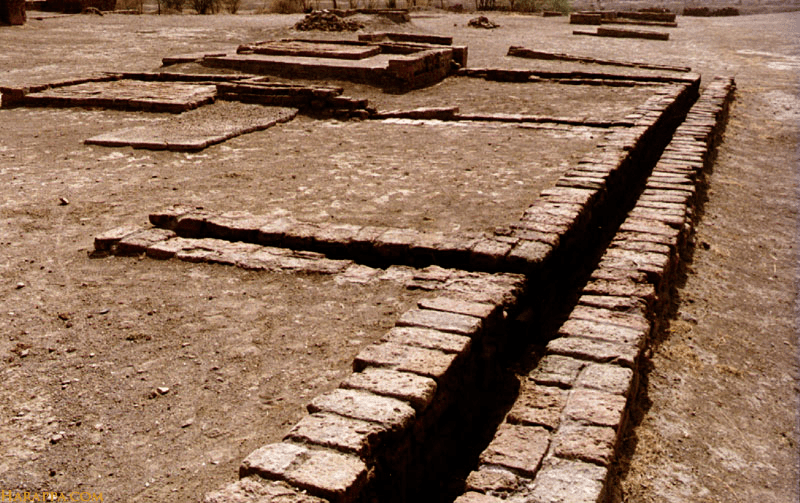
Frequently Asked Exam Facts
- No windows facing streets for privacy.
- Drains sloped for gravity flow; covered to avoid odors.
- Wells: Over 700 at Mohenjo-daro for water supply.
- No defensive walls in most sites; focus on civic planning.
- Population density: High, supported by efficient systems.
Comparison Tables / Charts
| Aspect | Mohenjo-daro | Harappa | Dholavira |
|---|---|---|---|
| Planning | Grid + Citadel (Great Bath) | Grid + Granaries | Grid + Reservoirs |
| Drainage | Covered drains, manholes | Brick-lined streets | Integrated with tanks |
| Size | 250 hectares | 150 hectares | 100 hectares |
| Unique | Waterproof bath | Parallel granaries | Signboard, stadium |
| Culture Link | Ritual hygiene | Economic storage | Water conservation |
Solved Example Questions
- Question: What was the unique feature of the drainage system in IVC cities? Answer & Explanation: Covered brick-lined drains with manholes. (Explanation: Advanced for hygiene; often tested with site examples like Mohenjo-daro.)
- Question: Which IVC site is famous for its Great Bath linked to town planning? Answer & Explanation: Mohenjo-daro. (Explanation: Public structure in citadel; linkage to ritual culture.)
- Question: What brick ratio was standard in IVC construction? Answer & Explanation: 4:2:1. (Explanation: For durability; key for planning questions.)
Flowchart Summary
Start: Site Selection (River Banks) ? Grid Layout Planning
?
Division: Citadel (Public) ? Lower Town (Residential)
?
Construction: Baked Bricks (4:2:1) ? Streets (N-S/E-W)
? (Branches)
Drainage: House Pipes ? Street Drains (Covered) ? Soak Pits/Manholes
Water Supply: Wells + Baths ? Hygiene Culture
?
End: Urban Sustainability (2600–1900 BCE) ? Decline Due to Floods
Spatial Context (Indian Archaeological Sites)
- Pakistan Sites: Mohenjo-daro (Sindh)—Great Bath, drains; Harappa (Punjab)—granaries, grid.
- Indian Sites: Kalibangan (Rajasthan)—ploughed fields, no drains; Lothal (Gujarat)—dockyard with drains; Dholavira (Gujarat)—reservoirs, signboard; Rakhigarhi (Haryana)—largest, basic drains.
- Other: Banawali (Haryana)—barley fields; Surkotada (Gujarat)—horse bones, fortifications. Highlight: Sites along Indus/Ghaggar for flood management—focus for map exams.
Ultra-Short Exam Capsule
- Planning: Grid, citadel-lower; Drainage: Covered, brick-lined; Sites: Mohenjo-daro (bath), Harappa (granary); Link: Hygiene + urban culture.
Type 2 – Quick Revision & Exam Tricks
- Highlights & Tricky Points: Planning uniform across sites but no drains at Banawali/Kalibangan; drainage more advanced than Mesopotamia.
- Memory Aids/Mnemonics: "Mohenjo Great Drain" ? Mohenjo-daro + Great Bath + Drainage. "4:2:1 Bricks Build Indus" for ratio.
- Quick Bullet-Style Revision:
- Timeline: 2600–1900 BCE Mature phase.
- Planning: Grid streets, citadel (upper), lower town.
- Drainage: Pipes from houses ? covered drains ? soak pits.
- Sites: Mohenjo-daro (bath/drains), Harappa (granaries), Dholavira (reservoirs).
- Culture: Hygiene, no palaces; tools: Baked bricks.
- Linkage: Site (Mohenjo-daro) ? Tool (bricks) ? Culture (ritual baths).
- Common Exam Traps: Confusing citadel with fort (no defense); assuming all sites have baths (only Mohenjo-daro).
- Confusing Concepts: Gridiron vs. random layout (IVC grid); manholes vs. open drains (covered in IVC).
- Key Terminology/Sites/Tools: Citadel, Gridiron, Manholes; Mohenjo-daro-Harappa-Lothal; Baked bricks-pipes.
Type 3 – PYQs & Expected Questions
Previous Year Questions
- SSC CGL: What feature of Indus Valley town planning indicates advance? Final Answer: Drainage systems.
- RRB NTPC: Which city of the Indus Valley Civilization is known for its well-planned grid system of streets? Final Answer: Mohenjo-daro.
- UPPSC: The drainage system in the Harappan cities was remarkable, with covered drains running along which part? Final Answer: Streets.
- SSC CGL: The Lower Town in the town planning of the Indus Valley Civilization had a larger area and is believed to have been used as? Final Answer: Quarters for the working class people.
- RRB NTPC: The Indus Valley civilization had an advanced sewage and drainage system, with well-built underground channels that provided? Final Answer: Efficient sanitation and waste.
Expected/High-Probability Questions
- What was the standard brick ratio used in IVC town planning? Final Answer: 4:2:1.
- Name the IVC site famous for its integrated drainage with a dockyard. Final Answer: Lothal.
- Which public structure in Mohenjo-daro exemplifies waterproofing in IVC planning? Final Answer: Great Bath.
- In IVC drainage, what were used for maintenance access? Final Answer: Manholes.
- Compare the town planning features of Harappa and Dholavira. Final Answer: Harappa: Granaries; Dholavira: Reservoirs.
- Which IVC site lacks a proper drainage system? Final Answer: Kalibangan.